Tags

  • Published on

    Spying on Orwell

    It was while I was finishing 'Eric is Awake' that I decided to travel to the remote Hebridean Isle of Jura and stay in the house, nay the very room where Orwell wrote '1984'. It was a slightly oppressive narrow cell in a lovely house looking over a seal-draped bay that held a little of the sadness that came with knowing that although the house, Barnhill,  was a refuge for him, the remote location and the painful illness he was already suffering from, along with the Herculean task of typing out his final draft, (no typists could be convinced to travel there) helped him to an early death. 

    While we were there, My friend Steve and I attempted a ludicrous experiment with a micro-camera and a kite. Always slightly clumsy and inept with practical tasks, George Orwell, real name Eric Arthur Blair, would have been amused by the results. 
  • Published on

    The Pursuit of Red Things

    Image description
    Well, you know, it’s been very nice you dropping by every now and then. No really, it’s been lovely and we all had an interesting time what with me musing on various subjects and you lapping it up. If this is your first visit, then let me tell you you’re a little behind the curve but still bang on trend. But the time has now come to consider the pursuit of red things.

    I first noticed my predilection for red things a few months ago. To be honest, I’ve been a little slow on the uptake as the whole scarlet object things has been going on for years and I have simply not been paying attention. It kind of crept up on me like that horrible little fellow in the film ‘Don’t Look Now’. I didn’t even see it coming. Like that bit in Close Encounters of the Third Kind when Richard Dreyfus starts playing with his mashed potato, I suddenly realised how the whole thing comes together.

    The thing about red things is that in nature they are used in the aquatic world to ward off predators. ‘Don’t touch me, I’m poisonous’ is what the bloody hue generally communicates. But in botany, the friendly berry-red hawthorn on the bough is saying, ‘come on birdies, tuck in. How the heck are we going to spread our seeds without you eating us and pooing us out all over the shop?’ 


    They are lures, the red things. Designed to lure you in and make you consume them almost before you really know what you are doing.

    And that’s what just happened to you.

    Below are some of my red things. There’s a red book, a red fillum and another red fillum. If you don’t consume them, well, how else am I going to spread my seed? How else are my red things going to be dispersed?

    Picture
    Yes, these are my red things. There's a vintage award-winning post-punk documentary shot between 1978 and 1981 - Rough Cut & Ready Dubbed

    There's a short red comic film about modern art and it's critics. This has the added joy of being free.  The Art of the Critic


    Finally there's dear Eric of course, who is a  book, as if you didn't know, about George Orwell waking up in the body of a homeless man in contemporary Britain.  Eric is Awake


    Thank you for visiting the blog today and allowing yourself to be coerced into an abusive commercial relationship. I promise it won’t happen again. Next time it will be back to the usual politics, random observations and fleshy tubeness you know and love. 


    Have a nice day. 


    Now please wash your hands. Commerce is a filthy business.

  • Published on

    The Art of the Impossible

    Image description
    The current split between Russia and the US on Syria is merely the latest manifestation of the personal compromise politicians make when they enter ‘the art of the possible’ and enter into the conspiracy of diplomacy and rhetoric that suppresses the fact that the notion is simply an artifice.

    The phrase belonged to Otto von Bismarck, the First Chancellor to Wilhelm 1 of Prussia. Bismarck played the game of Machiavellian politics to the nth degree, his aggressive history revealing the uber-reapolitik politician as a contradictory character. Ruthless and conservative with an innate disdain for democracy, he also established the beginning of the world’s first welfare state, seeing practical pragmatic reasons to bolster economic growth by giving workers security.  

    Although the man who believed in ‘blood and iron’ rather than speeches and majority decisions would find nothing unfamiliar with the face-off over intervention in a bloody civil war, he would probably be perplexed by the principled facades of Putin and John Kerry, trumpeting their arguments as if motivated by the dead children pulled from the dusty rubble of bombed Syrian districts or the bloody cul-de-sacs of military marshlands like Iraq or Afghanistan and not by the Cold War by any other name that they have continued to wage from the familiar entrenchments of East and West.

    There is a refreshing honesty to Bismarck’s approach in retrospect, however appalling some of the ideas he espoused about the rule of the Junkers or landed aristocracy over the puppet elected officials of Government. His first principle was ‘does it meet the aims of the Empire?’ If not, then he was against it and would use military might or oppose its use equally passionately without feeling the need to paint the action as a ‘mission to fight tyranny’ or ‘defend the victims of oppression.’ For him, it was a pragmatic, amoral action motivated entirely by the self -interest first of the Prussian Empire and then of the nascent German state. In 1888 he spoke against the possibility of a European war over Bulgaria in tones that seem all too familiar, opposing ‘a war whose issue no man can foresee. At the end of the conflict we should scarcely know why we had fought.’

    Realpolitik, both the word and the principle, was conceived in an age before public relations. Nowadays the blood and iron, even in the face of blank opposition from your own population, must be coated in the sheen of principle, however implausible or hypocritical. The seasoned diplomat clings to their hypocrisy as the only thing that distinguishes us from animals. To them, it shows our capacity for the artful avoidance of morality, even if we have the capacity for it and revels in the sophistry.

    Putin is against the US taking action outside of the UN because he loses his veto and therefore his share of the game. Obama and Kerry dress up ignoring the UN option and literally soldiering on as a necessity, despite widespread opposition by those stung by the Iraqi morass, by grandstanding in particular on the specific red line of sarin gas.

    Undeniably cruel and inhumane, chemical warfare and its definition under the Chemical Weapons Convention has also been slanted in the direction of post-WWII politics. The few most noted breaches of the convention are the gassing of the Kurds by Saddam at Halabja, the release of sarin gas in Japan by the Aum Shinrikyo cult and the most recent example in Syria.

    This seems counter-intuitive if you think of chemical warfare in the round. Really? Only a few examples of such breaches since the Convention emerged? Does that seem possible or probable? What about Agent Orange in Vietnam? The white phosphorus that was used by the US in Iraq and the Israelis in the Occupied Territories? Plenty of charred children there to rail against and yet Schedule 1 of the Chemical Weapons Convention specifies ‘chemicals that have few or no uses outside of chemical weapons.’ It doesn’t say you can’t have them. You can legitimately test chemical weapons or use them for unspecified medical research. If you aren’t permitted to use them, why test them? What are you testing them for? Moisturiser?

    Schedule 2 specifies chemicals that have ‘legitimate small-scale applications’ which must be declared but are only subject to restrictions to those countries that are not signatories. Take note all those nations who wish to use mustard type gases. Sign up to the CWC and you can get away with no restrictions on substances also used to fill up your average ink cartridge.

    Schedule 3 is a doozy and may explain why there have been so few technical breaches of the CWC. This covers chemicals that ‘have large-scale uses apart from chemical weapons.’ In other words, the possessions of white phosphorus or defoliants like Napalm are all permitted to be stockpiled in quantities up to 30 tons by any signatory nation. Hence the lack of any real sanctions against their use in Vietnam, Afghanistan, Chechnya, Iraq or Gaza.

    But even here, the self-interest is merely the sub-text of a diversionary debate about the contents of each nation’s chemistry set. As usual it will be easy to find Syria’s chemical weapons inventory by simply locating the receipts in the defence departments of those apparently willing to intervene. The trade in chemical weapons by the US and UK in particular but also by Russia, has not been impeded by the Chemical Weapons Convention. It is obvious that victims of a bombing campaign die of conventional weapons in far greater numbers than they do from chemical weapons. But the convention, cobbled together in the spirit of preserving the chemical option by every signatory nation who turned up to the first meeting, is just the latest tool in a political game that sees the old Cold War divisions cloaked in a semblance of principle.  

    No one denies the tragedy and injustice of non-combatants, particularly children becoming, along with truth, the first casualties of war. But there is the familiar stench of realpolitik about the Chemical Weapons Convention’s role in the present debate over Syria and it reeks of blood and iron. 

  • Published on

    The Art of the Critic - Conceptual Art and its Critics

    This was a short twelve minute comedy film we made some years ago about conceptual art and its critics. At the time, it was much appreciated by former director of the Institute for Contemporary Arts, Ivan Massow, who was fired for describing modern concept art as "pretentious, self-indulgent, craftless tat" and "the product of over-indulged, middle-class [...], bloated egos who patronise real people with fake understanding". He called the ICA a "pillar of the shock establishment". He attacked Tracey Emin saying she "couldn't think her way out of a paper bag", though he admitted this comment was "a little below the belt." Since then they have become best buddies and he has completely revised his opinion.  This film can be said to mock both sides of the equation. It is not suitable for children and will almost certainly offend. If you click on it anyway, you are clearly a seeker of cheap sensation. Well done. 
  • Published on

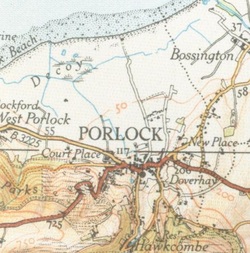
    The Person From Porlock

    Image description
    It’s the perennial question asked only of writers, artists and Michael Gove. ‘Where do you get your ideas from?’ Apart from saying more about the person asking the question than the one having to answer it, the response can only be that a tall dark stranger visits us all annually at midnight, carrying a sealed brown paper parcel and a card reading ‘A Muse Esq’. He is a public limited company listed on the stock character exchange. But when we toss facetious into a box and consider it seriously, the truthful response is that we are indeed visited by strangers. Ideas, if that is what they aspire to be called, can be regarded as interlopers; interventionists who often arrive, slowly or in a mad rush, half-dressed, barely coherent and trailing questions that they expect to be answered.

     The New Testament has, buried in the labyrinthine wastes of Hebrews turgid homilies, an exhortation to ‘be not forgetful to entertain strangers: for thereby some have entertained angels unawares’. On the one hand, divine dinner guests would seem to be an attractive prospect. But the etiquette of such a visitation? If I serve chicken, would it be cannibalism for Gabriel to chomp down on a winged relative? Would fairy cakes be taking the piss? 

    Whoever penned Hebrews (scholars cannot agree but probably a depressed Roman) failed to observe the downside of such social blessings. The same celestial messenger can arrive an hour early without even a bottle of sacramental wine to mollify the dripping agnostic, newly emerged from an interrupted baptism in the en-suite. There is the Angel of Death and there is Santa Claus. There are great ideas and there are stinkers that will waste your time. Fate, throwing up Lone Rangers and Men from the Pru in equal measure, constantly reminds that in art and in life, there are catalysts and there are spanners in the works. Which brings us to that ultimate stranger - the person from Porlock.

    Samuel Taylor Coleridge, let it be said loud and clear, was a bit of a precious moppet at the best of times. Once forced to stay behind in the garden, nursing a gammy leg whilst his house guests the Lambs and Wordsworths yomped about the heath curing their gout; he penned a melodramatic little number called ‘This Lime Tree Bower my prison!’ It’s not just the self-pitying whine that irritates. It’s the use of that exclamation mark. The literary equivalent of a camp droll shrieking ‘Darling, it’s the absolute limit! I’ve been left off the guest list for Marjorie’s fondue!’ It makes us want to shake him and bellow in his ear, ‘Pull yourself together Sammy. You’re a grown poet. Now take off that Albatross necklace. You’re stinking out the parlour.’

    An earlier poem, Kublai Khan was reputedly written under the influence of opium. As STC was the 18th Century equivalent of Pete Doherty, it is pretty fair to assume that all his poems and indeed his shopping lists were written under the same influence. I wouldn’t like to have been his milkmaid. ‘Two pints and a jug of pink antelope please’.

    Sitting in a farmhouse parlour at Culbone, Coleridge fell into what he called a deep sleep, but which most Doctors would call a narcotic coma. The literary world knows what happened next. Coleridge claimed to have dreamed visions and two or three hundred lines of his most celebrated poem.

    ‘On awakening he appeared to himself to have a distinct recollection of the whole, and taking his pen, ink, and paper, instantly and eagerly wrote down the lines that are here preserved. At this moment he was unfortunately called out by a person on business from Porlock, and detained by him above an hour, and on his return to his room, found, to his no small surprise and mortification, that though he still retained some vague and dim recollection of the general purport of the vision, yet, with the exception of some eight or ten scattered lines and images, all the rest had passed away like the images on the surface of a stream into which a stone has been cast, but, alas! without the after restoration of the latter!’

    Who was the mysterious stranger who knocked up our most inspired drug addict? An early Jehovah’s Witness? A liniment salesman with a free sample for that gammy leg? A drug dealer bringing by a new supply for his opium pipe? Like all the strange interlopers that enter our lives, he could have been a wrecker of dreams or a blessing in disguise. A wrecker if he denied us more of ‘In Xanadu did Kubla Khan a stately pleasure dome decree.’ A blessing if he deprived us of the baffling whimsy of verse four’s ‘As if this earth in fast thick pants were breathing.’  Thick pants? Velour breeches or velvet plus-fours and an aqualung?

    Would Coleridge have babbled on with more and more perverse and increasingly absurd stanzas without the intervention of the mysterious stranger? Was the person an interesting, charming man with more talent in his little Porlockian finger than STC had in his entire pipe? Or was he, like Peter Cook’s E.L Wisty, forever persisting with ‘an interesting fact’ and trying to sell you a used postillion. We can never know. But sometimes, the stranger becomes your friend. A good idea that sticks around and is good enough to spend a little time with you just when you need him.

    There are many others who have good cause to ponder the ambiguity of the unexpected. Stevie Smith, the still small trenchant voice of our true English hearts, took the no-nonsense approach.  She could not abide preciousness in herself or in others and, in her ire, wrote a poem called ‘Thoughts about the Person from Porlock.’

    ‘Coleridge received the person from Porlock
    And ever after called him a curse.
    Then why did he hurry to let him in?
    He could have hid in the house.

    It was not right of Coleridge in fact it was wrong
    (But often we all do wrong)
    As the truth is I think he was already stuck
    With Kubla Khan’


    Ideas come along and you may be convinced that they are absolute gems and welcome visitors. But the truth is you don’t really know until you’ve entertained them for a while. In a period of depression or ennui when inspiration wanes, writers wait for a catalyst, a spur, a trigger. They fear it and they desire it.

    They wait for a stranger.

    Knock, knock.

    Who’s there? 


  • Published on

    Beware the Wartime Prime Minister

    Image description
    UK Prime Minister David Cameron may think it is the hand of history he feels on his shoulder over Syria. In fact, it is the dread hand of Anthony Charles Lynton Blair. ‘Call me Dave’ and ‘Call me Tony’ are in almost daily telephone contact over this issue. In fact, Cameron has formed a strong relationship with the former Labour Prime Minister since his election, reflecting the increasingly stodgy middle ground of British politics. The background noise to Cameron’s decision on whether to go to war, as he struggles to hear Blair’s advice from a yacht in the Mediterranean, comes from the likes of retired General Sir Michael Rose who says taking advice from Blair is like asking the arsonist how to put out the fire he started.

    Don’t imagine that the British Parliament voting down action on this occasion is the end of the affair. War is ubiquitous. There’s always another one around the corner or the resurgence of the one you just kicked into touch. We can be sure that before the end of his term, (so much longer than the terms at Eton) Cameron will once again march his forces up to the top of hubris hill and next time there’s no guarantee that he will march them back down again.

    What Cameron probably fails to appreciate is that the man on the end of the phone is an addict and he runs the risk of becoming addicted to the same toxic hubris of all recent Prime Ministers faced with a decision to preside over a history enhancing military intervention. Not a week goes by when our most famous middle-east peace envoy isn’t advocating military action against Iran, Syria or that dodgy Muslim grocer down the high road who is definitely, according to intelligence, overcharging for onions. 

    Blair was always susceptible. He saw the Falklands effect on Margaret Thatcher and recognised a significant factor in distracting the electorate from examining too deeply his style over substance approach to political ideology was a short satisfying military action with an relatively defensible raison d’etre. 

    His first taste of the forbidden fruit was Bosnia. The moral case was clear - prevent the Serbs from another bout of ethnic cleansing after 8,000 Bosnian Muslim men and boys were massacred in Srebrenica. Then, when the tide turned and the Albanians returned to wreak vengeance on the Serbs, Tony resolutely looked the other way. Even as scores of Albanian children were named ‘Tonibler’ in honour of their saviour, he had moved on to set up his next score. It wasn’t enough and the first hit is always for free. You don’t pay until you are hooked. 

    He has learnt a little, our Tone. He no doubt has advised Cameron against compiling a dossier on Syria’s use of chemical weapons. Instead a ropy Joint Intelligence Committee analysis that could no more than suggest that it was possibly probable on a wet Wednesday when all things had been considered that Assad might possibly, even probably, but never definitely have been involved in the use of something that may be described as toxic, or skin-altering, such as fake tan or even maybe phosphorus. Oh wait, no, not phosphorus, that’s what the Americans used in Fallujah and there wasn’t any need for international condemnation or a red line there. Let’s just say chemical, possibly. And the Syrian rebel groups, including those affiliated with Al Qaida, have very probably, possibly rained fairy dust on their enemies, but never, ever anything vaguely chemical. Perhaps. 

    After the reverberations of his humiliation at the hands of the House of Commons have died away, the only sound ‘Call me Dave’ will hear at Number 10 is the insistent ringing of his telephone. If he has learnt anything at all this week, he’ll let it go to voicemail.